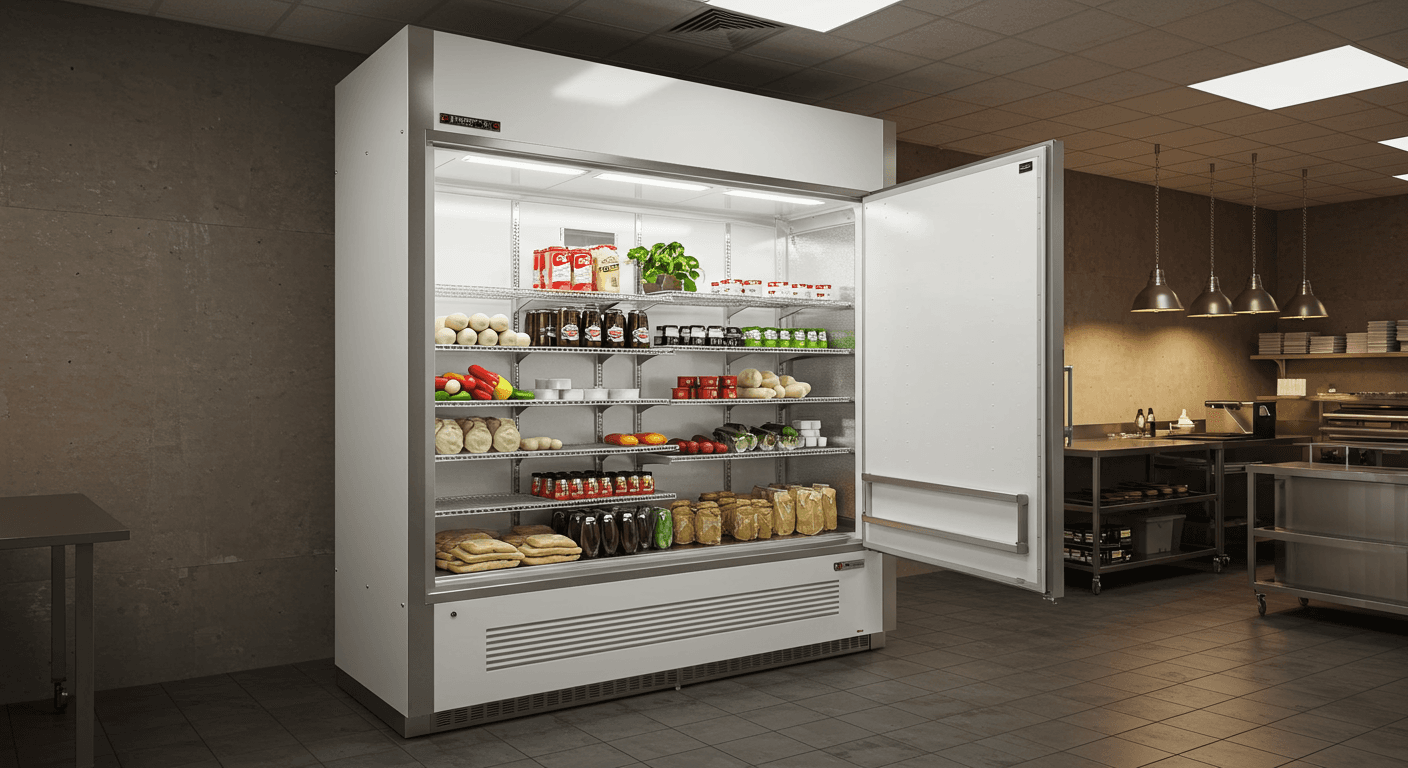
The Complete Buyer's Guide to Walk-In Coolers
Why a Walk-In Cooler Is a Worthwhile Investment
A walk-in cooler is one of the most important pieces of equipment in any food service operation, food manufacturing facility, or retail business that handles perishable goods. Unlike reach-in refrigerators that offer limited capacity and restricted access, walk-in coolers provide a dedicated temperature-controlled room where staff can store, organize, and retrieve products efficiently. The investment in a quality walk-in cooler pays dividends through reduced food waste, improved organization, better compliance with health codes, and the ability to purchase products in bulk at lower per-unit costs.
However, purchasing a walk-in cooler is not a simple transaction. There are numerous factors to consider, from the physical size and configuration of the unit to the type of insulation, the refrigeration system, flooring options, and installation requirements. Making the wrong choice can result in a unit that does not fit your space, fails to maintain proper temperatures, consumes excessive energy, or requires costly modifications after installation. This guide walks you through every key decision point to help you make an informed purchase.
Understanding Your Storage Needs
The first step in purchasing a walk-in cooler is understanding exactly what you need to store and how much of it. Different products have different storage requirements. Fresh produce needs to be stored between 34 and 40 degrees Fahrenheit with good air circulation. Dairy products require similar temperatures but should be kept separate from strong-smelling items. Raw meats need to be stored on lower shelves at 32 to 36 degrees. Beverages for a convenience store or bar need rapid chilling capability and easy access.
Make a detailed inventory of the products you plan to store, including the maximum volume you expect to handle during peak periods. Consider seasonal fluctuations, delivery schedules, and how quickly you turn over inventory. A restaurant that receives daily deliveries can get by with a smaller cooler than one that stocks up for the entire week. Factor in shelving and organizational needs as well, since you will not be able to use every cubic foot of the cooler for product storage. A good rule of thumb is to plan for about 50 to 60 percent usable storage capacity after accounting for shelving, aisle space, and air circulation gaps.
Insulation: The Foundation of Performance
The insulation in your walk-in cooler's panels is what keeps the cold air inside and the warm air outside. The two most common insulation materials used in walk-in cooler panels are polyurethane foam and polyisocyanurate foam. Both are excellent insulators, but they differ in their thermal performance characteristics and fire ratings. Polyurethane foam is the industry standard for walk-in cooler panels, offering R-values of approximately 7.1 per inch of thickness. A standard four-inch panel provides an R-value of about 28, which is sufficient for most cooler applications operating between 35 and 40 degrees Fahrenheit.
For freezer applications or environments where energy efficiency is paramount, five-inch or six-inch panels provide higher R-values and better long-term thermal performance. It is important to note that insulation performance can degrade over time as the foam ages, so choosing a higher initial R-value provides a margin of safety against this natural aging process. Pay attention to the panel construction as well. Look for panels with continuous foam cores without voids or gaps, metal skins that are properly bonded to the foam, and joint systems that minimize thermal bridging at panel connections.
Refrigeration Systems: Self-Contained vs. Remote
The refrigeration system is the heart of your walk-in cooler, and you have two primary options: self-contained systems and remote condensing units. Self-contained systems mount the entire refrigeration assembly, including the compressor and condenser, on top of the cooler or on an exterior wall of the unit. They are simpler to install, less expensive upfront, and do not require refrigerant piping runs between the unit and a remote location. However, they generate heat and noise at the point of installation and may not be practical for large coolers or applications where the cooler is located inside a building where heat rejection is a concern.
Remote condensing units locate the compressor and condenser away from the cooler, typically on the roof or an exterior wall of the building. Refrigerant lines run between the remote condenser and the evaporator coil inside the cooler. Remote systems are quieter at the point of use, reject heat outside the building rather than into the kitchen or sales floor, and can provide better performance in high-ambient-temperature environments. They are more expensive to install due to the refrigerant piping and electrical work required, but they are the preferred choice for larger coolers, indoor installations, and applications where noise and heat are concerns.
Flooring Options
Walk-in coolers are available with or without integrated floor panels. Units with floors are self-contained, portable in a sense, and can be installed on any reasonably flat surface without modification to the existing building floor. The integrated floor provides insulation beneath the stored product, preventing cold loss through the ground and keeping the cooler's interior at a consistent temperature. Floor panels are typically constructed with reinforced surfaces rated for foot traffic and hand cart loads, and upgraded floor options are available for applications that require forklift or pallet jack access.
Floorless walk-in coolers are installed directly on the building's existing floor, which must be a properly insulated concrete slab. This option is common in new construction where the floor slab can be designed with appropriate insulation and vapor barriers during the building process. Floorless units eliminate the step-up that comes with integrated floor panels, making them easier to access with hand carts and dollies, and they are often preferred in applications where products are rolled in and out of the cooler frequently.
Doors, Hardware, and Accessories
The door is the most frequently used component of any walk-in cooler, and its quality directly impacts energy efficiency and long-term reliability. Look for doors with heavy-duty hinges rated for commercial use, self-closing mechanisms that ensure the door returns to the sealed position after each use, and magnetic gaskets that provide a positive seal around the entire door perimeter. Door heaters are essential for freezer applications to prevent the gasket from freezing to the frame, and they are recommended for cooler applications in humid environments where condensation can be a problem.
Additional accessories to consider include interior shelving systems made from NSF-listed materials, LED interior lighting for energy efficiency and reduced heat generation, digital temperature displays mounted on the exterior of the unit for easy monitoring, strip curtains for high-traffic doorways, and alarm systems that alert staff when the door has been left open or the temperature has drifted out of range. Each of these accessories adds cost to the initial purchase but can save money and prevent product loss over the life of the unit.
Installation Considerations
Finally, consider the installation requirements for your walk-in cooler before making a purchase. Indoor units need adequate ceiling clearance for the panel height plus the refrigeration system and any required code clearances. Outdoor units need a level pad, weather protection for the refrigeration components, and compliance with local zoning and building codes. Electrical requirements must be assessed in advance, including the circuit capacity needed for the refrigeration system and any auxiliary components like lighting and door heaters. A qualified refrigeration contractor should be involved early in the planning process to ensure that the unit you select can be installed properly and efficiently in your specific location.
Investing the time to understand these factors before you buy will help you select a walk-in cooler that serves your operation efficiently and reliably for years to come. Contact International Coolers for personalized guidance based on your specific needs and facility.
Ready to get started on your project?
Whether you are planning a new walk-in cooler, replacing an aging freezer, or exploring insulated metal panel options, our team is ready to help.
Get a Free Quote