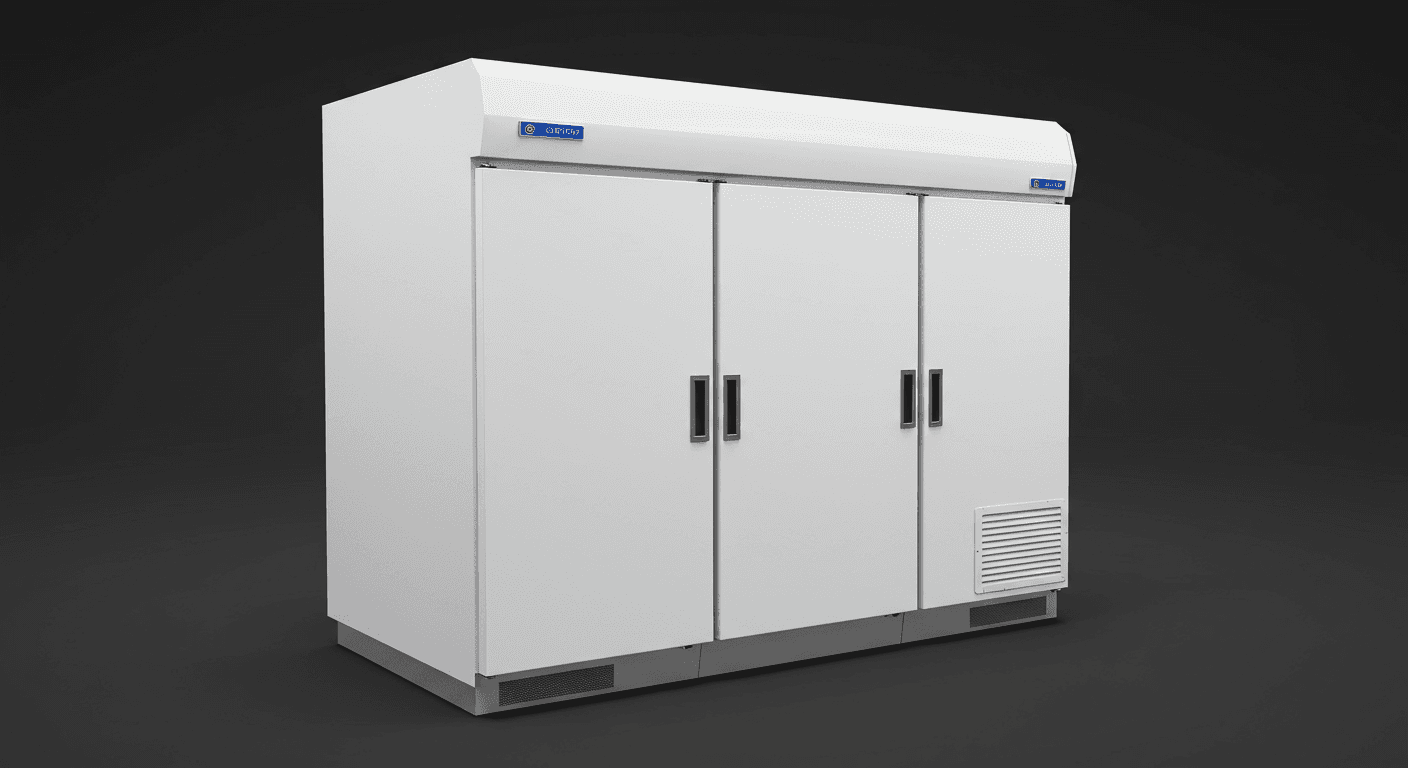
Why a Cooler-Freezer Combo Is the Smart Choice
Two Temperature Zones, One Efficient Unit
Most food service and retail operations need both refrigerated and frozen storage. The traditional approach is to purchase a separate walk-in cooler and a separate walk-in freezer, each with its own panel system, door, refrigeration equipment, and electrical connections. While this approach works, it is not always the most efficient use of space, money, or energy. A combination walk-in cooler-freezer unit, which integrates both temperature zones into a single structure separated by an insulated partition wall, offers significant advantages in many applications. Understanding these advantages can help you make a smarter purchasing decision that saves money upfront and over the life of the equipment.
Space Savings Through Shared Walls
The most immediately obvious advantage of a combination unit is space savings. When you install a separate walk-in cooler and walk-in freezer side by side, each unit has its own complete set of walls, including the two walls that face each other. These adjacent walls consume floor space without providing any usable storage volume. In a combination unit, the cooler and freezer share a common partition wall, eliminating one wall's worth of floor space from the overall footprint. For a typical installation, this translates to approximately six to twelve inches of recovered width, which may not sound dramatic until you consider that it comes at zero additional cost and provides usable storage space on both sides of the partition.
The space savings extend beyond the shared wall itself. With a single structural footprint rather than two separate units, there is no gap between units that collects debris and is difficult to clean. The electrical and plumbing connections are consolidated to one location rather than spread across two. And the overall installation typically fits into a more compact area of your facility, freeing up adjacent space for other operational needs. In tight kitchen environments or small retail back rooms where every square foot is valuable, these space savings can be the difference between a functional layout and an unworkable one.
Reduced Installation Costs
Installing a single combination unit is significantly less expensive than installing two separate units. The labor cost for assembling one structure is lower than for two, even though the combination unit is larger than either individual unit would be. Electrical work is simplified because both refrigeration systems can share a common power feed location, reducing the length of conduit runs and the number of circuit breakers required. If the units use remote condensing systems, the refrigerant piping for both systems can follow the same routing path to the condenser location, reducing piping material and labor costs. Concrete work or pad preparation is required for one footprint rather than two, and any site-specific modifications like wall framing, weatherproofing, or drainage are done once rather than twice.
The partition wall between the cooler and freezer zones in a combination unit also provides a thermal advantage that reduces equipment costs. The cooler side of the partition is maintained at 35 to 38 degrees, while the freezer side is at zero degrees or below. Because the cooler acts as a thermal buffer between the freezer and the ambient environment on that side, the heat gain through the partition wall is significantly lower than it would be through an exterior freezer wall facing a 75-degree room. This reduced heat gain means the freezer refrigeration system can be slightly smaller than it would need to be in a standalone configuration, saving equipment cost and reducing ongoing energy consumption.
Operational Efficiency and Convenience
From a daily operational standpoint, combination units offer practical advantages that improve kitchen and storage efficiency. Staff can access both refrigerated and frozen products from the same general area, reducing the walking distance and time spent retrieving ingredients during food preparation. Many combination units are configured with internal pass-through doors or windows between the cooler and freezer zones, allowing staff to move product between zones without going through the kitchen or back hallway. This is particularly useful for operations that thaw frozen products in the cooler as part of their food prep workflow, a recommended practice that maintains food safety while reducing preparation time.
Inventory management is simplified when refrigerated and frozen products are stored in adjacent, easily accessible zones. Staff can quickly check stock levels in both zones during a single walk-through, and receiving personnel can sort incoming deliveries into the appropriate zone efficiently. The consolidated location also simplifies temperature monitoring, since both zones can be checked and logged from a single visit rather than requiring walks to two separate locations in the facility.
Flexible Zone Sizing
One of the most valuable features of a combination walk-in cooler-freezer is the ability to customize the ratio of cooler space to freezer space based on your specific needs. In a standard separate-unit approach, you are limited to the available standard sizes for each unit, and achieving the ideal balance of cooler and freezer space may not be possible without purchasing more total space than you need. In a combination unit, the partition wall can be placed at any point within the structure, allowing you to allocate exactly the right amount of space to each zone.
For example, a restaurant that stores primarily fresh products with a smaller need for frozen storage might configure a combination unit with 70 percent cooler space and 30 percent freezer space. A convenience store that sells a large volume of frozen novelties and ice cream might reverse that ratio. A catering operation with seasonal fluctuations in product mix might benefit from a partition wall that can be repositioned as needs change, though this requires planning during the initial design phase. International Coolers works with each client to determine the optimal zone ratio based on their product mix, delivery schedule, and operational patterns.
When Separate Units Make More Sense
While combination units offer significant advantages for many applications, there are situations where separate walk-in coolers and freezers are the better choice. If the cooler and freezer need to be located in different areas of your facility due to workflow considerations or space constraints, a combination unit is obviously not practical. If one zone needs to be significantly larger than what can reasonably be incorporated into a combined structure, separate units may be necessary. And if your operation uses the cooler and freezer at dramatically different frequencies, with one zone seeing constant traffic and the other accessed only occasionally, separate units with doors sized for their respective traffic levels may be more energy efficient.
The decision between a combination unit and separate units should be made based on a thorough analysis of your specific storage needs, facility layout, operational workflow, and budget. International Coolers can help you evaluate both options and recommend the configuration that delivers the best combination of performance, efficiency, and value for your particular situation. Contact us for a consultation and let our team design the ideal cold storage solution for your business.
Ready to get started on your project?
Whether you are planning a new walk-in cooler, replacing an aging freezer, or exploring insulated metal panel options, our team is ready to help.
Get a Free Quote