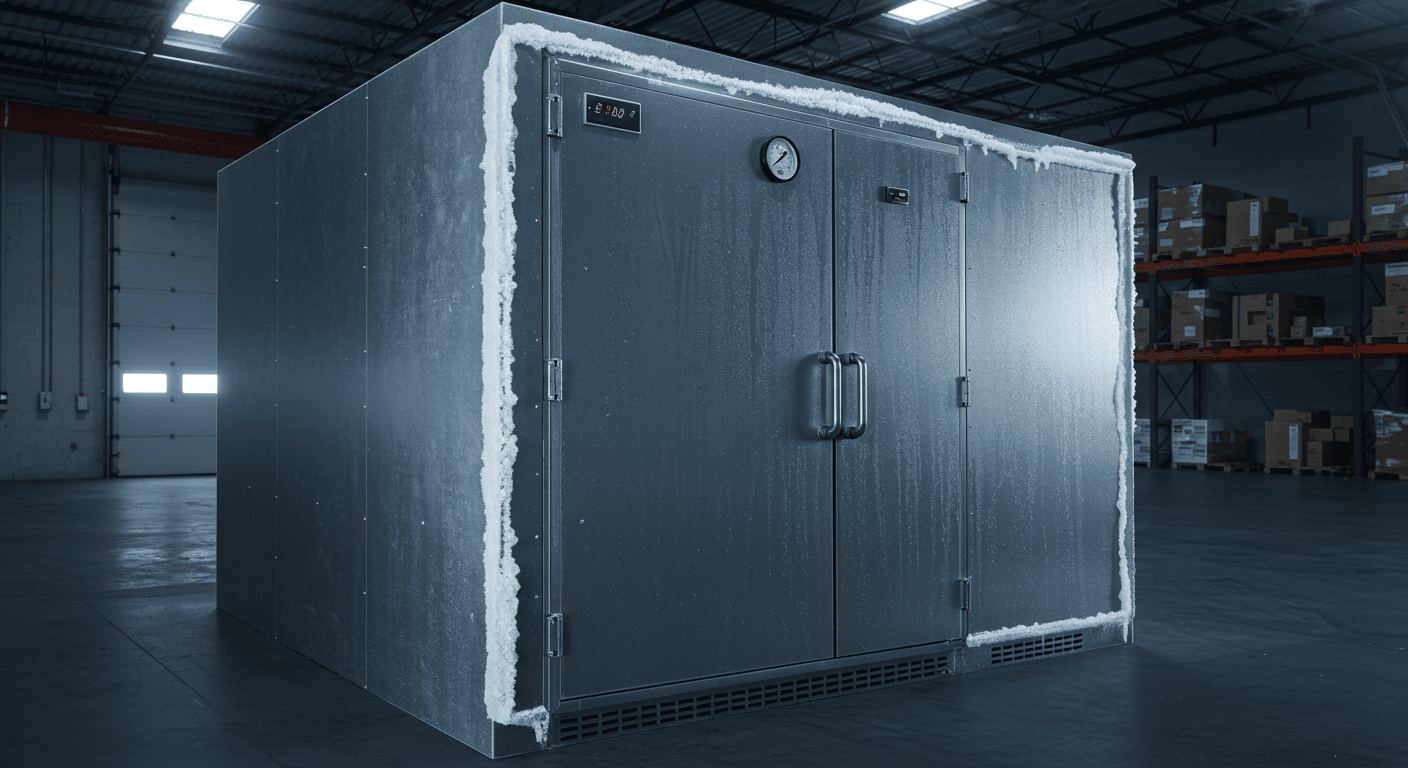
Top 5 Things to Know Before Buying a Walk-In Freezer
Walk-In Freezer Purchases Require Careful Planning
A walk-in freezer represents a significant capital investment for any business, and the consequences of purchasing the wrong unit extend far beyond the initial price tag. An undersized freezer forces you to turn away product or rent supplemental storage. An improperly insulated unit racks up energy bills that erode your profit margins month after month. A freezer installed without proper ground protection can suffer catastrophic frost heave damage within a few years. These are expensive mistakes, and they are entirely avoidable with proper planning and the right information. Here are the five most important things to understand before you commit to a walk-in freezer purchase.
1. Insulation Thickness Is Not Optional
The insulation in your walk-in freezer panels is the single biggest factor in the unit's long-term energy performance and operating cost. While a walk-in cooler can function adequately with four-inch insulated panels, a walk-in freezer operating at zero degrees Fahrenheit needs a minimum of five-inch panels, and many applications benefit from six-inch panels. The reason is simple physics: heat transfer through an insulated panel is proportional to the temperature difference across it. A freezer at zero degrees in a 75-degree room has a 75-degree temperature differential, roughly double that of a cooler at 36 degrees. Thicker insulation with higher R-values dramatically reduces the rate of heat gain, which directly reduces the workload on your refrigeration system and lowers your electricity bills.
Do not be tempted by lower-cost units that use four-inch panels for freezer applications. While they may maintain temperature initially, they force the refrigeration system to work harder, consuming more energy and shortening compressor life. Over a ten-year ownership period, the additional energy costs of inadequate insulation will far exceed the savings from cheaper panels. Invest in the proper insulation thickness from the start, and you will benefit from lower operating costs and longer equipment life for the duration of your ownership.
2. Refrigeration System Sizing Is Critical
The refrigeration system on your walk-in freezer must be properly matched to the size of the unit, the ambient conditions at the installation site, and the expected product load. An undersized system will struggle to maintain temperature, run continuously, wear out prematurely, and fail during peak demand periods when you need it most. An oversized system will short-cycle, turning on and off frequently in rapid succession, which wastes energy, causes temperature fluctuations, and creates excessive wear on the compressor's starting components.
Proper refrigeration sizing requires a detailed load calculation that accounts for the transmission heat gain through the panels, the infiltration heat gain from door openings, the product heat load from the items being stored, and internal heat sources such as lighting and fan motors. This calculation must also factor in the ambient temperature at the condenser location, which can vary dramatically between an air-conditioned indoor space and a rooftop in direct summer sun. A qualified refrigeration engineer or an experienced manufacturer like International Coolers can perform this calculation accurately and recommend a system that delivers reliable performance without waste.
Pay particular attention to the condenser location. Remote condensers on rooftops or exterior walls are exposed to outdoor temperatures that can range from below zero in northern winters to well over 100 degrees in southern summers. The refrigeration system must be designed to operate across this full range, which may require head pressure controls, fan cycling, or variable-speed condenser fans to maintain proper system performance in all conditions.
3. Defrost System Design Affects Product Quality
Every walk-in freezer needs a defrost system to remove the ice that accumulates on the evaporator coil during normal operation. What many buyers do not realize is that the defrost system design can significantly affect product quality and energy consumption. During each defrost cycle, the evaporator coil warms above freezing temperature to melt accumulated ice. This temporarily raises the air temperature inside the freezer, and if the defrost cycle is too frequent, too long, or too aggressive, it can cause temperature fluctuations that partially thaw and refreeze stored products, degrading their quality over time.
Electric defrost systems are the most common and least expensive, but they add heat directly to the freezer interior during each defrost cycle. Hot gas defrost systems are more efficient because they use the compressor's own waste heat rather than adding new heat from electric elements. Demand defrost controllers, which initiate defrost cycles based on actual ice accumulation rather than a fixed timer schedule, can reduce the number of unnecessary defrost cycles and minimize temperature fluctuations. Ask your manufacturer about the defrost system options available for your unit and choose the configuration that best balances initial cost with product quality and energy performance.
4. Floor and Foundation Protection Is Non-Negotiable
If your walk-in freezer will be installed on a ground-level concrete slab, you must address the risk of frost heave. This is the phenomenon where the cold temperature inside the freezer penetrates through the floor insulation and into the soil beneath the slab, causing ground moisture to freeze and expand. The resulting soil expansion can lift and crack the concrete slab, buckle the freezer floor panels, damage shelving and racking systems, and compromise the structural integrity of the entire unit. Frost heave damage is progressive and expensive to repair, often requiring complete disassembly and reinstallation of the freezer.
The two most common frost heave prevention methods are under-slab heating systems and elevated floor designs. Under-slab heating uses a network of glycol-filled tubing or electric resistance cables embedded in or beneath the concrete slab to keep soil temperatures above freezing. This approach works well for new construction where the heating system can be incorporated into the slab design. Elevated floor systems raise the freezer floor above the building slab on structural supports, creating an air gap that allows ambient heat to prevent soil freezing. This approach is common in retrofit installations where modifying the existing slab is impractical. Either solution adds cost to the project, but skipping floor protection is never an acceptable option for a ground-level freezer installation.
5. Total Cost of Ownership Matters More Than Purchase Price
The purchase price of a walk-in freezer is only a fraction of the total cost you will incur over its service life. Operating costs, including electricity for the refrigeration system, defrost heaters, door heaters, lighting, and fan motors, will accumulate every month for ten, fifteen, or twenty years. Maintenance costs, including compressor servicing, coil cleaning, gasket replacement, and defrost system maintenance, add up over time. And the hidden cost of product loss from temperature excursions caused by inadequate or poorly maintained equipment can be substantial.
When comparing walk-in freezer options, look beyond the sticker price and evaluate the total cost of ownership. A unit with better insulation, a more efficient refrigeration system, and higher-quality components will cost more upfront but can save thousands of dollars in operating and maintenance costs over its lifetime. Ask manufacturers for energy consumption estimates based on your specific operating conditions, and factor those into your total cost comparison. Many utility companies offer rebate programs for high-efficiency commercial refrigeration equipment, which can offset the higher initial cost of premium units and accelerate your return on investment. International Coolers can provide detailed energy projections and help you identify available rebate programs for your location.
Ready to get started on your project?
Whether you are planning a new walk-in cooler, replacing an aging freezer, or exploring insulated metal panel options, our team is ready to help.
Get a Free Quote