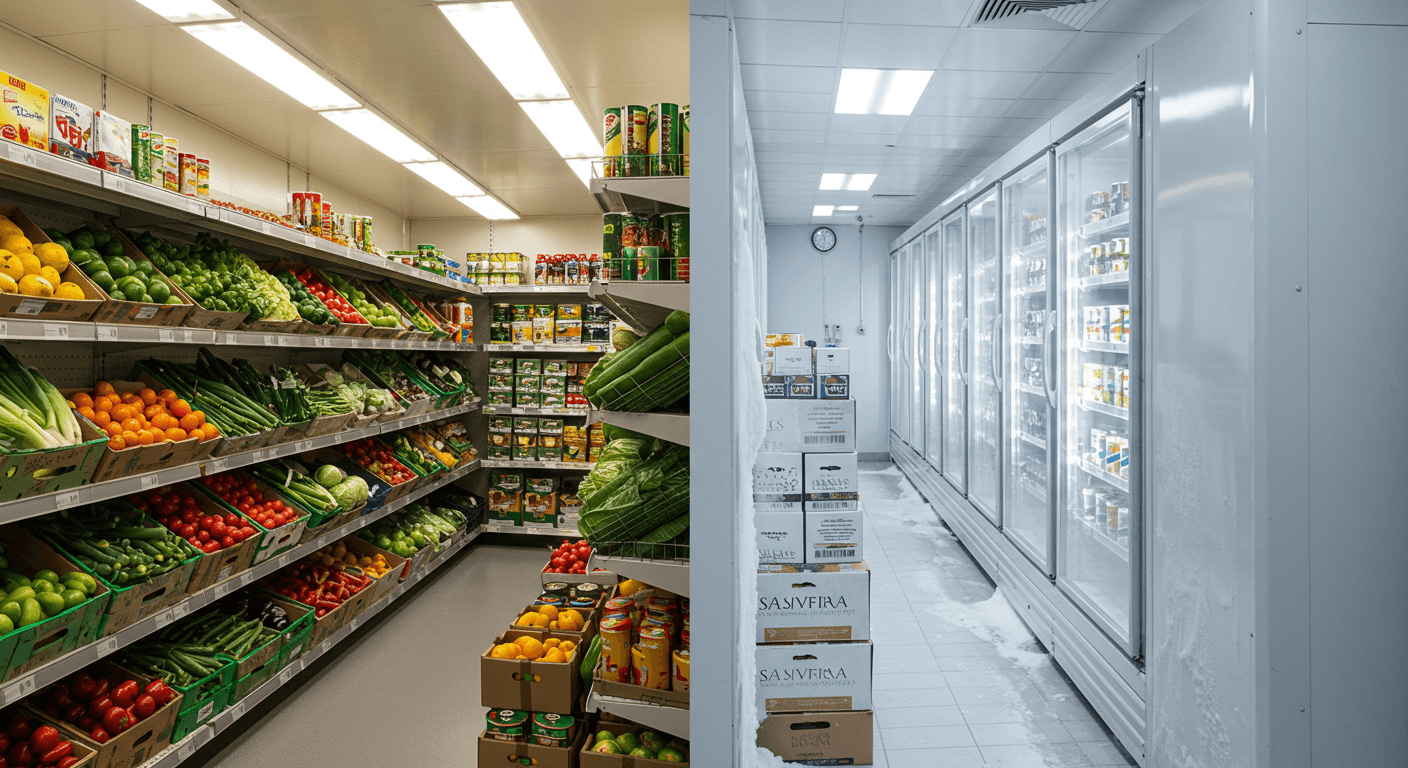
Walk-In Cooler vs. Freezer: Key Differences
More Than Just a Temperature Difference
At first glance, the difference between a walk-in cooler and a walk-in freezer might seem straightforward: one keeps things cold, and the other keeps things frozen. While that basic distinction is correct, the engineering differences between the two types of units go far deeper than the thermostat setting. Walk-in freezers require heavier insulation, more powerful refrigeration systems, specialized door hardware, different flooring considerations, and additional components that are not needed in cooler applications. Understanding these differences is essential for making the right purchasing decision, budgeting accurately for your project, and ensuring that your cold storage equipment performs reliably over its full service life.
Insulation Thickness and R-Value
The most fundamental structural difference between a walk-in cooler and a walk-in freezer is the thickness and thermal performance of the insulated panels that form the walls, ceiling, and floor. Walk-in coolers typically maintain interior temperatures between 35 and 40 degrees Fahrenheit, and standard four-inch polyurethane foam panels with an R-value of approximately 28 provide sufficient thermal resistance for this application. The temperature differential between the cooler interior and the surrounding ambient environment is relatively modest, typically 30 to 45 degrees, so four-inch panels keep energy consumption reasonable and maintain stable temperatures.
Walk-in freezers operate at zero degrees Fahrenheit or below, creating a temperature differential of 70 degrees or more relative to the surrounding environment. This much larger temperature gradient drives significantly more heat transfer through the panel walls, which is why freezers require thicker panels with higher R-values. Most walk-in freezers use five-inch or six-inch insulated panels, providing R-values of approximately 36 to 42. For low-temperature freezers operating at minus 20 degrees or colder, even thicker panels may be specified. The increased panel thickness adds to the cost of the unit and slightly reduces the interior volume for a given exterior dimension, both of which should be factored into your planning.
Refrigeration System Capacity
The refrigeration system in a walk-in freezer must work significantly harder than one in a cooler to maintain its much lower temperature setpoint. Freezer compressors are larger, consume more electricity, and generate more heat than their cooler counterparts. The evaporator coils inside a freezer must be designed to operate at much lower suction temperatures, and the system must be capable of removing not just sensible heat from the products being stored but also the latent heat released when moisture in the products freezes.
This increased refrigeration demand translates directly to higher equipment costs and higher operating costs. A walk-in freezer's refrigeration system can cost 30 to 50 percent more than a comparable cooler system, and the ongoing electricity costs to operate a freezer are proportionally higher as well. The compressor in a freezer works harder and runs longer cycles than a cooler compressor, which also means that freezer compressors have shorter expected service lives unless they are properly maintained. Regular maintenance including coil cleaning, refrigerant charge verification, and defrost system inspection is even more critical for freezer systems than for cooler systems.
Defrost Systems
Walk-in freezers require defrost systems that walk-in coolers generally do not need. When warm, moist air enters a freezer during door openings, the moisture condenses on the evaporator coil and freezes into ice. Over time, this ice accumulation reduces the coil's heat transfer efficiency, restricts airflow, and can eventually cause the refrigeration system to fail if not addressed. Defrost systems periodically warm the evaporator coil just enough to melt accumulated ice, allowing the water to drain away through a heated drain line to a point outside the freezer.
The most common defrost methods for walk-in freezers are electric defrost and hot gas defrost. Electric defrost uses resistance heating elements mounted on the evaporator coil that are activated by a timer or an electronic controller at preset intervals. Hot gas defrost redirects hot refrigerant gas from the compressor discharge directly through the evaporator coil, using the system's own waste heat to melt ice. Hot gas defrost is more energy efficient because it uses heat that the system is already generating, but it requires additional piping and control components that increase the initial system cost. Coolers operating above freezing generally do not accumulate ice on their evaporator coils, so defrost systems are not required, though drain lines must still be provided for condensate removal.
Door Construction and Hardware
Walk-in freezer doors must address challenges that cooler doors do not face. The extreme temperature differential across a freezer door, often 70 degrees or more, creates a strong driving force for moisture migration. When warm, humid ambient air contacts the cold door surface, condensation forms. On a cooler door this condensation simply drips away, but on a freezer door it freezes, potentially sealing the door gasket to the frame and making the door difficult or impossible to open. To prevent this, freezer doors are equipped with perimeter heater wires embedded in the door frame that keep the gasket contact surface above freezing temperature at all times.
Freezer doors also require pressure relief ports or breather valves. When a freezer door is opened and warm air rushes in, then the door is closed and the warm air is rapidly cooled, the air contracts and creates a partial vacuum inside the freezer. This negative pressure can make it extremely difficult to open the door again until the pressure equalizes. Pressure relief ports allow outside air to enter the freezer as the internal pressure drops, preventing the vacuum effect. Walk-in coolers do not experience this phenomenon to a significant degree because the temperature differential is smaller and the resulting pressure change is negligible.
Flooring Differences
Flooring requirements differ significantly between coolers and freezers. Walk-in coolers with integrated floors use standard insulated floor panels that support foot traffic and light hand cart loads. These panels sit directly on the building floor or on a prepared surface, and the modest temperature differential does not create significant issues with the underlying surface. Walk-in freezer floors, however, must contend with the risk of freezing the ground beneath the unit. If a freezer with an integrated floor is placed on a concrete slab without protection, the cold temperature inside the freezer can eventually cause the moisture in the soil beneath the slab to freeze, creating frost heave that buckles the floor and damages the unit.
To prevent this, walk-in freezers installed on grade-level slabs require either an under-floor heating system or sufficient air space beneath the freezer floor to prevent ground freezing. Under-floor heating systems circulate warm glycol or use electric resistance cables beneath the slab to keep the soil temperature above freezing. Elevated floor systems use structural supports to raise the freezer floor above the slab, creating an air gap that allows ambient heat to prevent ground freezing. Both solutions add cost and complexity to the installation that walk-in cooler installations do not require.
Operating Cost Comparison
The ongoing operating costs of a walk-in freezer are substantially higher than those of a comparably sized walk-in cooler. The larger compressor consumes more electricity, the defrost system adds energy consumption that coolers do not incur, and the door heaters consume power continuously. As a rough guideline, expect a walk-in freezer to cost approximately two to three times as much to operate as a same-sized walk-in cooler, depending on the specific temperatures maintained, the ambient conditions, and the frequency of door openings. This operating cost differential should be considered when evaluating whether a combination cooler-freezer unit might be more cost-effective than separate units for your application. Contact International Coolers to discuss the best configuration for your specific needs.
Ready to get started on your project?
Whether you are planning a new walk-in cooler, replacing an aging freezer, or exploring insulated metal panel options, our team is ready to help.
Get a Free Quote