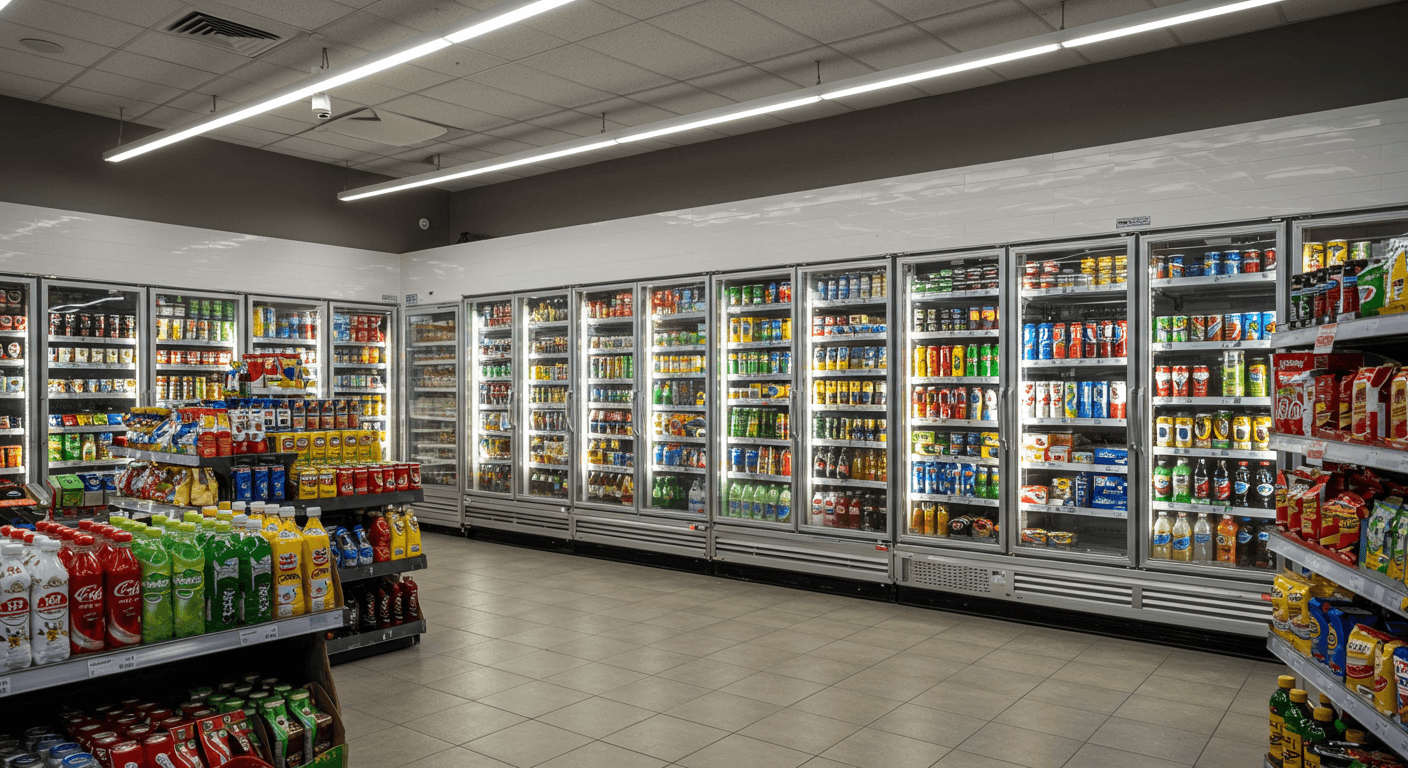
Product Placement in Convenience Store Coolers
Your Cooler Is Your Most Valuable Selling Space
In the convenience store business, the refrigerated display section is one of the most profitable areas per square foot in the entire store. Cold beverages alone can account for 30 to 40 percent of total store sales in many convenience operations, and when you add dairy, prepared foods, and other refrigerated categories, the cooler section often generates more revenue per linear foot than any other department. Given this reality, the way you arrange products within your cooler display has a direct and measurable impact on your store's profitability. Strategic product placement is not guesswork; it is a science backed by decades of retail research and consumer behavior data that convenience store operators can apply to maximize their cold vault performance.
Understanding the Customer's Eye Path
When a customer approaches a glass-door cooler display, their eyes follow a predictable pattern. Research into consumer shopping behavior has consistently shown that shoppers scan cooler sections from left to right and from eye level downward, similar to reading a page. This means that products placed at eye level in the left-center portion of a cooler section receive the most visual attention and, consequently, the highest sales rates. This prime real estate is often referred to as the strike zone, and it should be reserved for your highest-margin or highest-velocity products.
The strike zone typically spans from approximately 48 to 66 inches above the floor, which corresponds to the natural eye level of the average adult customer. Products placed above or below this zone receive progressively less visual attention. However, the lower shelves are not wasted space. Well-known brands with strong customer loyalty sell well even from lower positions because customers specifically seek them out. Newer products, higher-margin private label items, and promotional products benefit most from strike zone placement because they need the visual exposure to attract trial purchases.
Category Blocking and Vertical Merchandising
Category blocking is the practice of grouping related products together in a contiguous section of the cooler display. Rather than scattering different brands of energy drinks across multiple doors, for example, all energy drinks are displayed together in a clearly defined zone. This approach makes it easy for customers to find the product category they are looking for, compare options, and make a selection. Category blocking also creates visual impact through the massed display of similar packaging, which draws the customer's eye and communicates that your store is well-stocked and committed to that category.
Within each category block, vertical merchandising is more effective than horizontal merchandising. Vertical merchandising arranges a single brand or product line in a vertical column from top to bottom, while horizontal merchandising lines up products side by side across a shelf. Vertical arrangements allow customers to see multiple options from a single standing position without moving laterally, and they ensure that every brand has some presence in the strike zone. A customer looking for their preferred energy drink brand will find it in the vertical column whether they are looking at the top shelf or the middle shelf, and they are also exposed to competing brands in adjacent vertical columns that they might not have considered otherwise.
Door Placement Strategy
The positioning of product categories across the cooler doors follows strategic principles that maximize overall department sales. The most commonly purchased category should be placed in the center of the cooler run, not at the end. This forces customers to walk past other doors to reach their primary purchase, exposing them to additional product categories that may trigger impulse purchases along the way. In most convenience stores, single-serve cold beverages are the primary traffic driver, so they are typically positioned in the center doors, with secondary categories like water, juice, energy drinks, and dairy products on either side.
The doors at each end of the cooler run receive less traffic than the center doors, so they are best used for slower-moving categories that do not rely on impulse traffic, such as milk, eggs, and specialty beverages that customers specifically seek out. Some operators use the end doors for high-margin specialty items like craft beer or premium juices, leveraging the slightly lower traffic to create a more browsable, curated experience for customers who are willing to spend more time making a selection.
Shelf Depth and Facings
The number of product facings, which is the number of identical products lined up side by side on a shelf, directly influences both visual impact and sales velocity. More facings create a stronger visual presence that attracts customer attention and communicates product popularity. Products with a single facing are easy to overlook, while products with three or four facings create a block of color and branding that commands attention. Allocate facings based on sales velocity: your fastest-selling products should have the most facings to ensure they remain in stock between restocking cycles and to maintain the visual impact that drives their high sales.
Shelf depth is also important. If your cooler shelves are deep enough to hold two or three rows of product behind the front facing, make sure the front row is always fully stocked. Empty front facings are one of the biggest sales killers in convenience retail. Customers interpret an empty facing as a sign that a product is out of stock, and they will not reach behind a different product to check for their preferred item. Train your staff to pull product forward to the front of the shelf during every restocking cycle, and consider gravity-feed roller shelves for high-velocity beverage categories that automatically advance product to the front as items are removed.
Lighting and Visibility Optimization
The lighting inside your cooler display plays a crucial role in product visibility and perceived quality. Well-lit displays make products look fresh, appealing, and easy to identify, while poorly lit displays make the cooler section look neglected and uninviting. LED lighting is the current standard for cooler display illumination, offering bright, even light with excellent color rendering, low energy consumption, and minimal heat generation compared to older fluorescent lighting technology.
Position lighting strips at the top of each shelf section so that light falls down onto the product facings, illuminating labels and packaging graphics. Avoid positioning lights behind products, which creates silhouettes rather than highlighting the product itself. The color temperature of the lighting should be in the range of 3500 to 4500 Kelvin, which provides a neutral white light that renders product colors accurately. Cooler temperatures make certain colors look dull, so your lighting needs to compensate to ensure products look as vibrant behind the glass door as they do on an ambient shelf.
Seasonal and Promotional Adaptation
Effective cooler merchandising is not a set-it-and-forget-it activity. Consumer preferences shift with the seasons, and your product placement should adapt accordingly. Cold water and sports drink sales peak in summer months, while hot chocolate and seasonal coffee drinks gain prominence in winter. Energy drink consumption tends to be fairly consistent year-round, but specific flavors and limited-edition releases create opportunities for promotional displays that can drive incremental sales.
Work with your beverage distributors to identify promotional opportunities that include cooler display support. Many distributors offer cooler door clings, shelf talkers, and other point-of-sale materials designed to draw attention to featured products. Reserve a section of your cooler display for rotating promotional items, and move these promotions into high-visibility positions during their active periods. Track the sales lift from each promotional placement to build a data set that helps you make smarter merchandising decisions over time. International Coolers designs our convenience store display units with adjustable shelving and modular configurations that make planogram changes quick and easy, supporting the dynamic merchandising approach that drives maximum sales performance.
Ready to get started on your project?
Whether you are planning a new walk-in cooler, replacing an aging freezer, or exploring insulated metal panel options, our team is ready to help.
Get a Free Quote