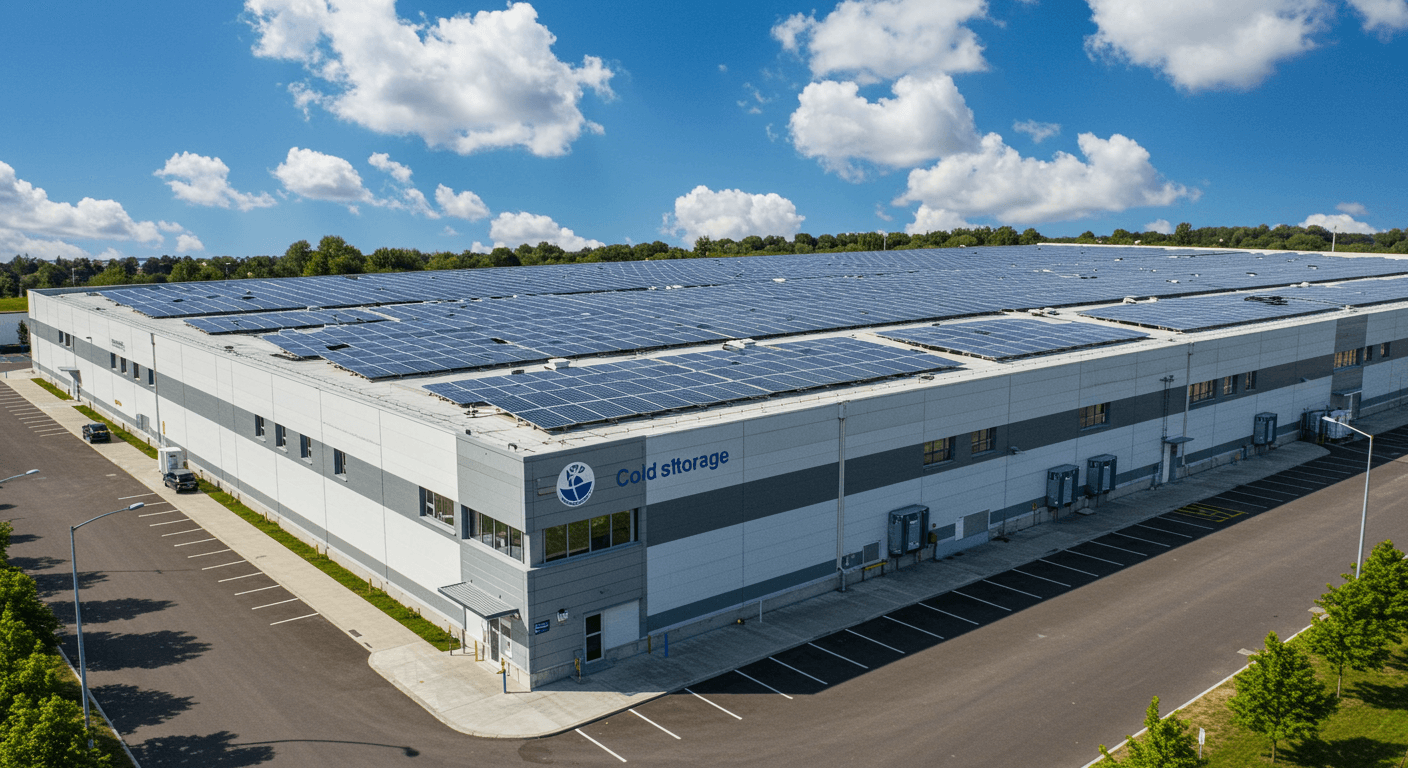
Sustainable Cooling Solutions for Your Business
Sustainability and Profitability Are Not Mutually Exclusive
For many business owners, sustainability conjures images of expensive green initiatives that cut into profit margins for the sake of environmental responsibility. In commercial refrigeration, the opposite is often true. The most environmentally beneficial upgrades to your cooling systems, including better insulation, higher efficiency compressors, advanced controls, and proper maintenance, are also the ones that deliver the most significant cost savings. Reducing the energy your refrigeration system consumes lowers your electricity bills every month while simultaneously reducing the greenhouse gas emissions associated with electricity generation. Using low-GWP refrigerants reduces your environmental liability while positioning your business for compliance with upcoming regulations. Investing in quality equipment that lasts longer generates less manufacturing waste over time. This guide outlines practical, proven strategies for making your commercial refrigeration systems more sustainable and more profitable at the same time.
Start with the Building Envelope
The most effective sustainability investment you can make in any cold storage system is improving the insulation that separates the cold interior from the warm exterior. Every BTU of heat that leaks through your cooler or freezer walls is a BTU that your refrigeration system must remove using electricity. Better insulation means less heat gain, which means less compressor run time, which means lower electricity consumption and lower operating costs. For existing walk-in coolers and freezers with aging insulation, consider whether panel replacement or addition of supplemental insulation is justified by the energy savings. For new installations, specify the thickest panels that your budget and space constraints allow, because the incremental cost of additional insulation is almost always recovered within a few years through energy savings.
Pay attention to the details of the building envelope beyond just panel thickness. Door gaskets that are worn, torn, or misaligned allow warm air to leak into the cooler continuously, wasting energy and forcing the refrigeration system to work harder. Strip curtains on frequently used doorways provide an additional barrier against thermal infiltration. Panel joints that have settled or shifted over time can develop air gaps that degrade thermal performance. A periodic inspection of the entire cold storage envelope, including panels, joints, doors, gaskets, and penetrations for electrical and plumbing connections, can identify and correct problems that are silently adding to your energy bills.
Upgrade to High-Efficiency Refrigeration Components
If your walk-in cooler or freezer is more than ten to fifteen years old, the refrigeration system is almost certainly using significantly more energy than a modern equivalent. Advances in compressor technology, motor efficiency, heat exchanger design, and electronic controls have dramatically improved the energy performance of commercial refrigeration systems over the past decade. Electronically commutated motors for evaporator and condenser fans consume 50 to 70 percent less energy than the shaded-pole motors found in older equipment. Variable-speed compressors match their output to the actual cooling load rather than cycling between full power and off, reducing energy consumption during partial-load conditions that represent the majority of operating hours. Electronic expansion valves optimize refrigerant flow more precisely than mechanical valves, improving system efficiency across all operating conditions.
When evaluating upgrade options, consider the total system rather than individual components. A compressor upgrade paired with a new evaporator coil and electronic expansion valve will deliver better results than a compressor upgrade alone, because the components are engineered to work together as an optimized system. International Coolers can assess your existing refrigeration equipment and recommend targeted upgrades that deliver the best return on investment for your specific situation.
Implement Smart Controls and Monitoring
Advanced electronic controls and monitoring systems offer significant energy savings by optimizing the operation of your refrigeration system based on real-time conditions rather than fixed timer schedules. Demand defrost controllers, for example, initiate defrost cycles only when ice has actually accumulated on the evaporator coil, rather than at fixed intervals regardless of whether defrost is needed. In many operations, demand defrost reduces the number of defrost cycles by 30 to 50 percent, saving the energy consumed by defrost heaters and reducing the temperature fluctuations that can affect product quality.
Floating suction pressure controls allow the compressor to operate at higher suction pressures when conditions permit, reducing the work required to compress the refrigerant and lowering energy consumption. During cooler weather or periods of low product loading, the compressor does not need to work as hard to maintain target temperatures, and floating suction pressure controls capture this savings automatically. Condenser fan cycling and variable-speed controls similarly optimize energy use at the condenser by matching fan speed to the actual heat rejection requirement rather than running at full speed at all times.
Temperature monitoring systems with data logging capabilities provide visibility into how your refrigeration system performs over time, enabling you to identify trends, diagnose problems, and verify that optimization strategies are delivering the expected results. Cloud-based monitoring platforms allow you to track performance across multiple locations from a single dashboard, making it practical to manage energy optimization programs across a fleet of coolers and freezers.
Transition to Low-GWP Refrigerants
The refrigerant in your cooling system has an environmental impact that extends beyond the energy it helps transfer. Traditional HFC refrigerants like R-404A have global warming potentials thousands of times greater than carbon dioxide, meaning that even small leaks release potent greenhouse gases into the atmosphere. The regulatory phase-down of HFC refrigerants under the EPA's AIM Act is reducing the availability of these refrigerants and increasing their cost, creating both an environmental and economic incentive to transition to lower-GWP alternatives.
For walk-in cooler and freezer applications, several viable low-GWP options are available. HFO-blend refrigerants offer a moderate reduction in GWP with relatively straightforward system modifications. Natural refrigerants like propane offer near-zero GWP and excellent thermodynamic performance, though system design must address flammability considerations. Carbon dioxide is increasingly used in larger commercial refrigeration systems, particularly in supermarket applications. International Coolers can advise you on the best refrigerant transition strategy for your equipment and help you plan ahead for a future where high-GWP refrigerants become increasingly scarce and expensive.
Maintain Your Equipment Religiously
The simplest and most cost-effective sustainability strategy for commercial refrigeration is consistent, thorough maintenance. A refrigeration system that is properly maintained operates at its designed efficiency, consuming the minimum amount of energy needed to maintain target temperatures. A neglected system accumulates inefficiencies that compound over time, driving up energy consumption and eventually leading to component failures that require expensive repairs and risk product loss.
Key maintenance tasks include cleaning condenser coils regularly to maintain heat transfer efficiency, inspecting and replacing door gaskets that are worn or damaged, verifying refrigerant charge levels to ensure optimal system performance, cleaning evaporator coils and drain lines to prevent ice buildup and water damage, and checking controls and sensors for accuracy. A professional maintenance inspection at least twice per year is recommended for most commercial refrigeration installations, with more frequent service for equipment in demanding environments or equipment that is approaching end of life. International Coolers offers maintenance guidance and can connect you with qualified service providers in your area to keep your equipment running at peak efficiency throughout its service life.
The Bottom Line
Sustainable cooling is not a separate category of equipment or a premium add-on; it is the result of making smart decisions about insulation, equipment selection, controls, refrigerants, and maintenance that reduce environmental impact while lowering operating costs. Every kilowatt-hour of electricity saved is a reduction in both your utility bill and the emissions associated with generating that electricity. Every pound of refrigerant kept inside the system rather than leaking into the atmosphere is a reduction in both your environmental footprint and your refrigerant replacement costs. International Coolers is committed to helping our customers achieve their sustainability goals through practical, proven strategies that deliver measurable results. Contact us to discuss how we can help you build a more sustainable and more profitable cold storage operation.
Ready to get started on your project?
Whether you are planning a new walk-in cooler, replacing an aging freezer, or exploring insulated metal panel options, our team is ready to help.
Get a Free Quote